MDRinAIS at the World Stroke Congress 2026, Seoul
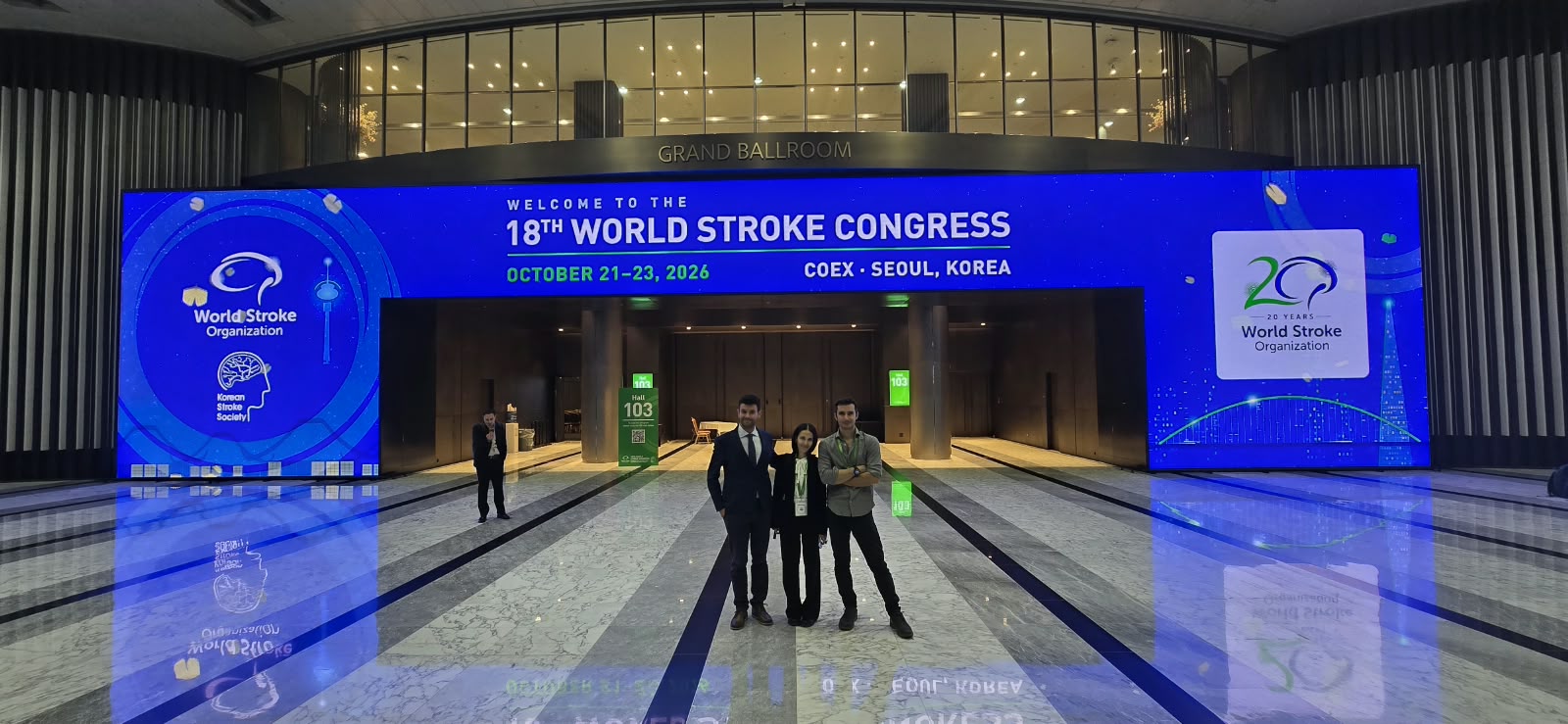
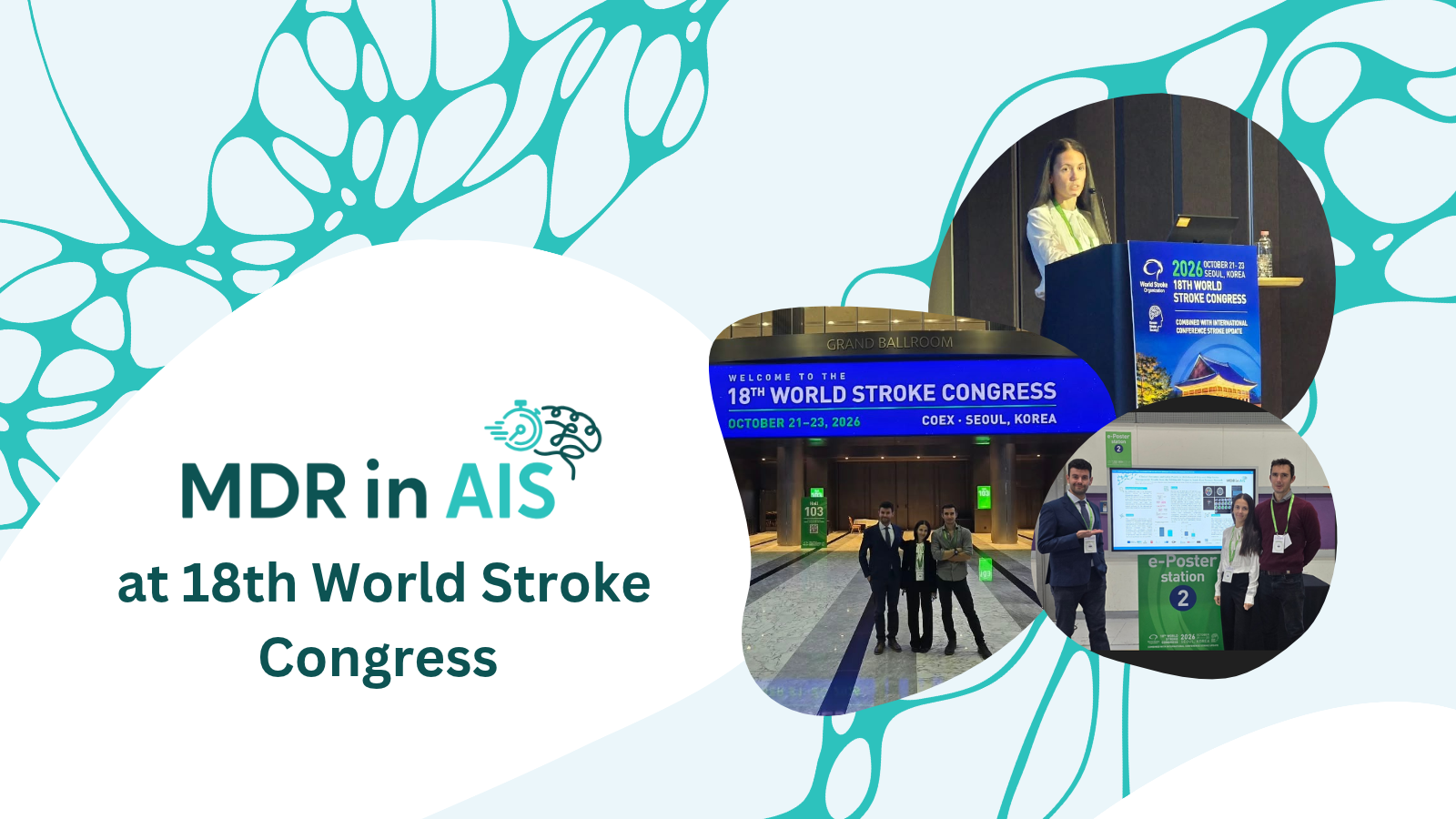
From 21 to 23 October, the MDRinAIS team joined the global stroke community at WSC 2026 to present early results and follow the field’s main discussions.
The 18th World Stroke Congress, organised by the World Stroke Organization jointly with the Korean Stroke Society’s International Conference Stroke Update, took place at the COEX Convention & Exhibition Center in Seoul. It was the first edition held in Korea since 2010 and brought together clinicians, researchers, policymakers and patient advocates from around the world.
MDRinAIS on the programme
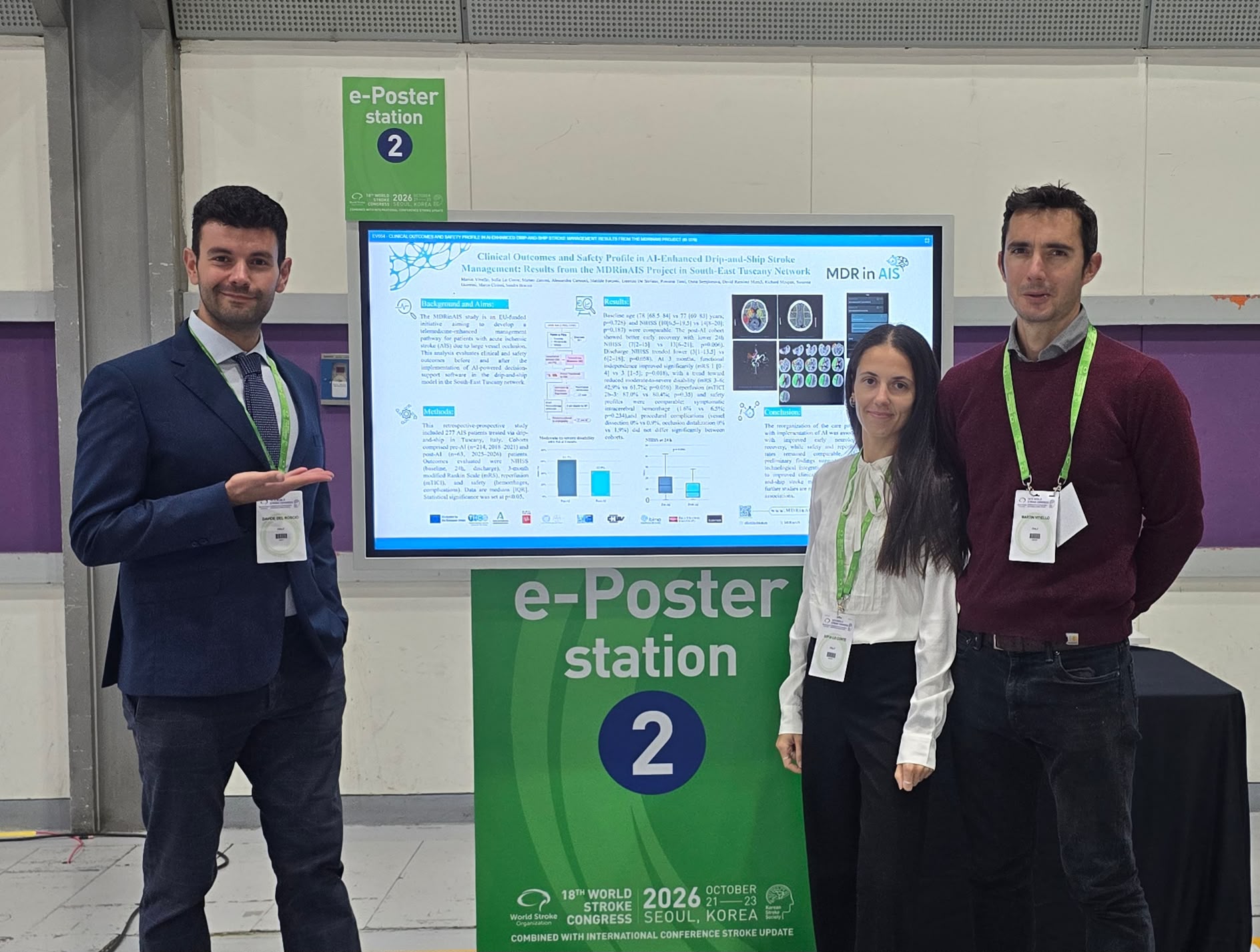
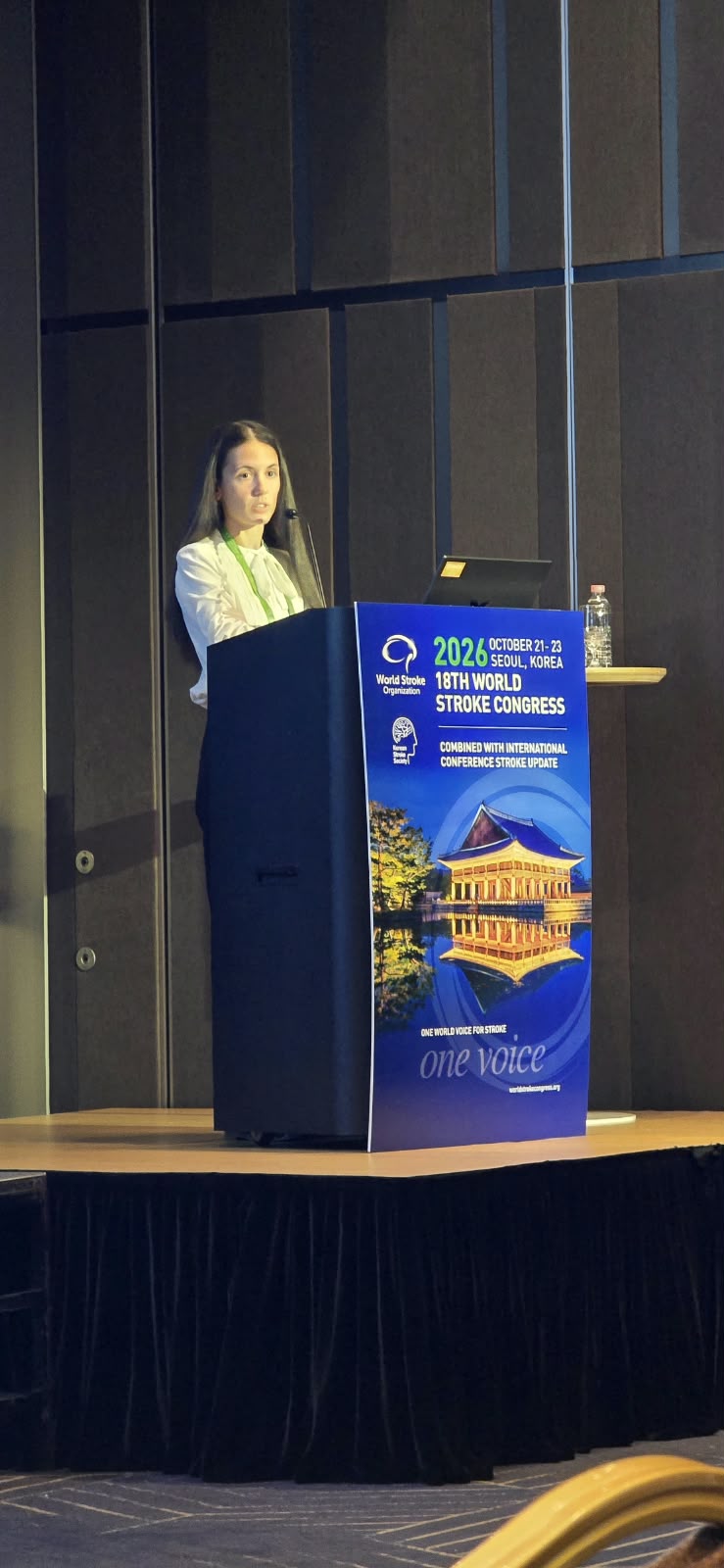
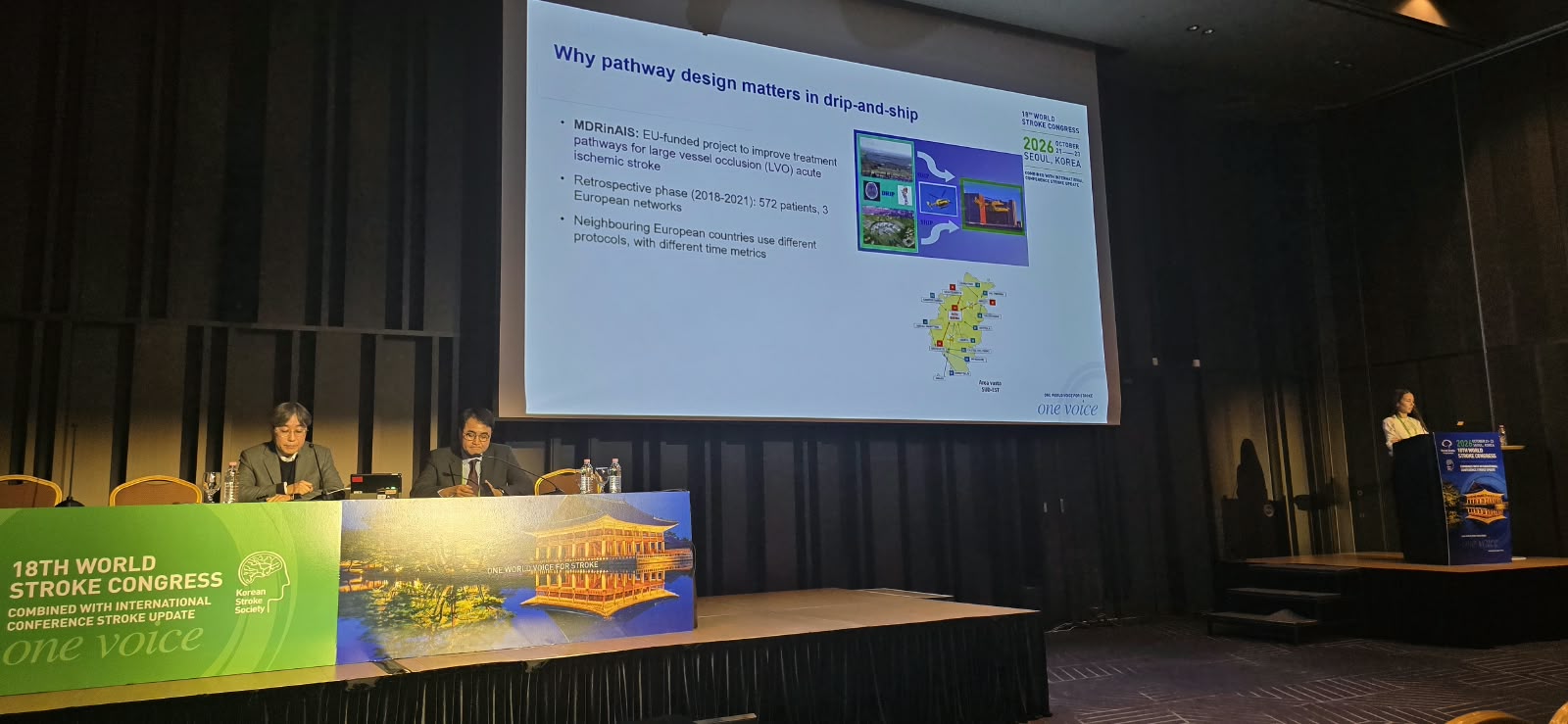
MDRinAIS was represented by Dr. Martin Vitiello and Dr. Sofia Lo Conte (Azienda Ospedaliero-Universitaria Senese, Siena) and Dr. Davide Del Roscio (USL Toscana Sud-Est). The team contributed two accepted abstracts which resulted in an e- poster viewing and an Oral presentation regarding our project’s preliminary and encouraging results from the Tuscan setting..
Both drew questions and exchanges with colleagues working on stroke networks, imaging and transfer pathways, which are directly relevant to MDRinAIS’s focus on shortening door-to-reperfusion times.
What the field is talking about
Getting treatment to the patient faster.
Mobile stroke units remain a central theme, with continuing debate on where they add the most value, how they fit into existing networks, and their cost. In parallel, discussion of newer thrombolytic strategies, tenecteplase in particular, centred on how to turn trial evidence into everyday practice. Robotic remote thrombectomy drew attention as an early look at how distance to a specialist centre might eventually matter less. Much of this is still at the evidence-building stage, and for MDRinAIS it reinforces the case for measurement of real-world pathways.
Equity.
Differences in access to stroke care between countries, and between regions within them, featured prominently. Advanced technologies make the question more pressing: innovations that benefit only well-resourced centres risk widening existing gaps. This is a theme MDRinAIS, as a multi-centre European project comparing care pathways, is well placed to inform.
Beyond reperfusion.
Neuroprotection and rehabilitation received sustained attention, reflecting a broader view of stroke care as a continuum from prevention and the hyperacute phase through to recovery and long-term outcomes. Better outcomes depend on the whole chain, not just on the speed of recanalisation.
Looking ahead
The congress confirmed that the questions MDRinAIS addresses (time-critical pathways, AI-supported imaging, drip-and-ship organisation and system-level equity) are among the field’s priorities. We thank the congress organisers and everyone who stopped by to discuss our work, and we look forward to sharing further results through our channels. Next stop: the EPH Conference in Bilbao from November 10-13th where we hope to bring our findings to a diverse crowd of stakeholders in public health.
MDRinAIS is funded under Horizon Europe through the THCS partnership (Grant Agreement No. 101095654) and, for Italy, by Regione Toscana. [Confirm the required acknowledgement wording.