
AI Stroke imaging decision support linked to higher thrombectomy rates in England
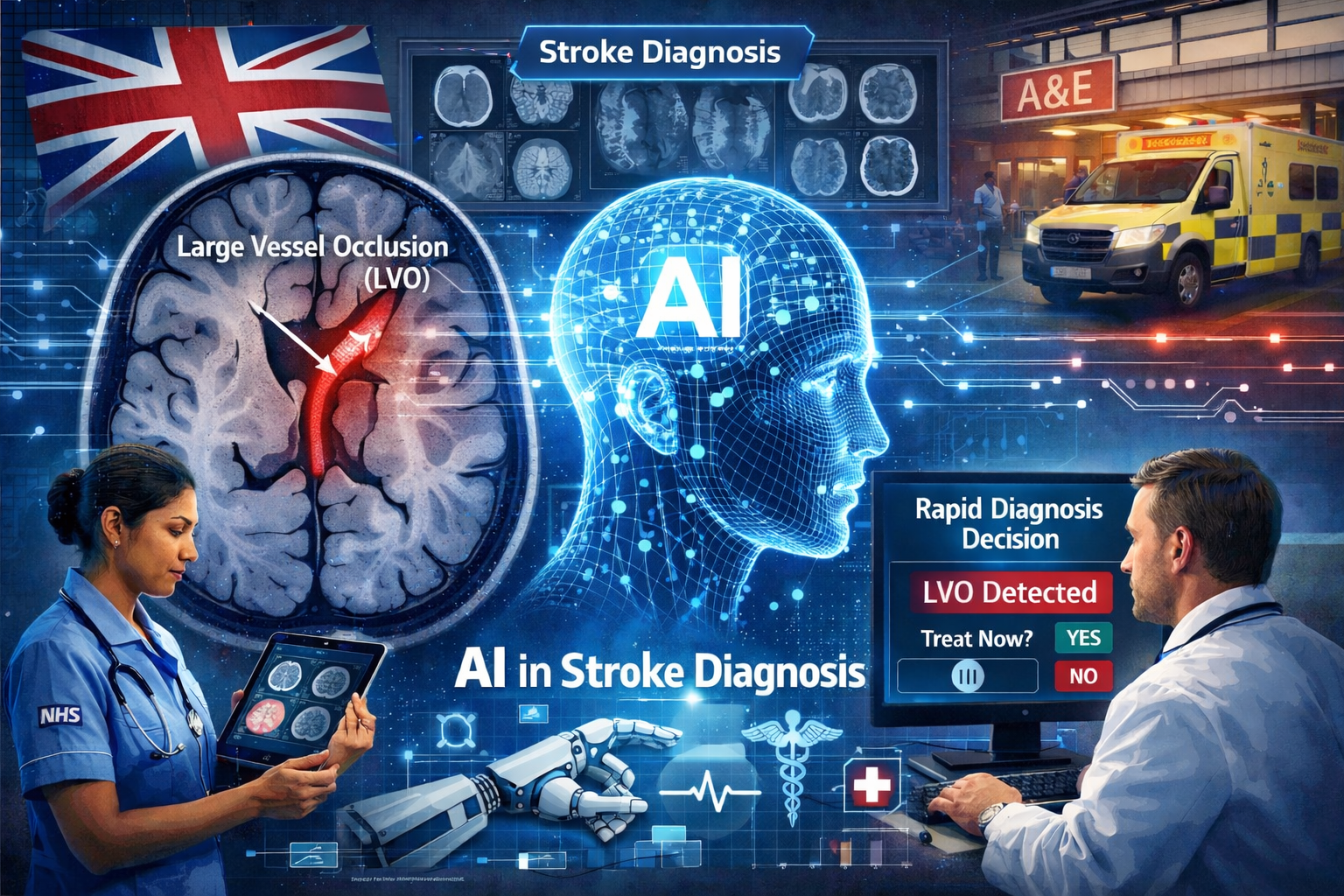
A large, real world evaluation across the NHS reports that using AI imaging decision support (Brainomix 360 Stroke) was associated with more endovascular thrombectomies and shorter ‘door-in door-out’ transfer time, a key factor in improving access to time-critical treatment for large vessel occlusion (LVO) stroke.
Thrombectomy rates increased in both groups over time, but the increase was large at evaluation sites: from 2.3% before implementation to 4.6% after implementation ( an approximate doubling). At the patient level within evaluation sites, AI use was associated with a higher likelihood of receiving thrombectomy (OR 1.57, 95% CI 1.33-1.86).
Functional outcomes were also modestly better among patients whose imaging was reviewed with AI support: modified Rankin Scale (mRS) 0-2 occurred in 47.1% with AI versus 45.6% without AI (p= 0.0073, OR 1.16 95% CI 1.07-1.25).
Although observational data cannot prove causality, the findings suggest that AI decision support can act as a pathway enabler by improving candidate identification and accelerating transfer. Future work can help clarify which workflow elements drive the biggest gains.
Author: David Ramirez Moro, Biomedical Research Institute of Malaga and the Nanomedicine Platform
Sources: Artificial intelligence imaging decision support for acute stroke treatment in England: a prospective observational study. Nagaratnam, Kiruba et al.The Lancet Digital Health, Volume 7, Issue 12, 100927
Keywords: #ArtificialIntelligence, #ImagingDecisionSupport, #LargeVessel #Occlusion, #NHS, #AcuteStroke, #EndovascularThrombectomy.